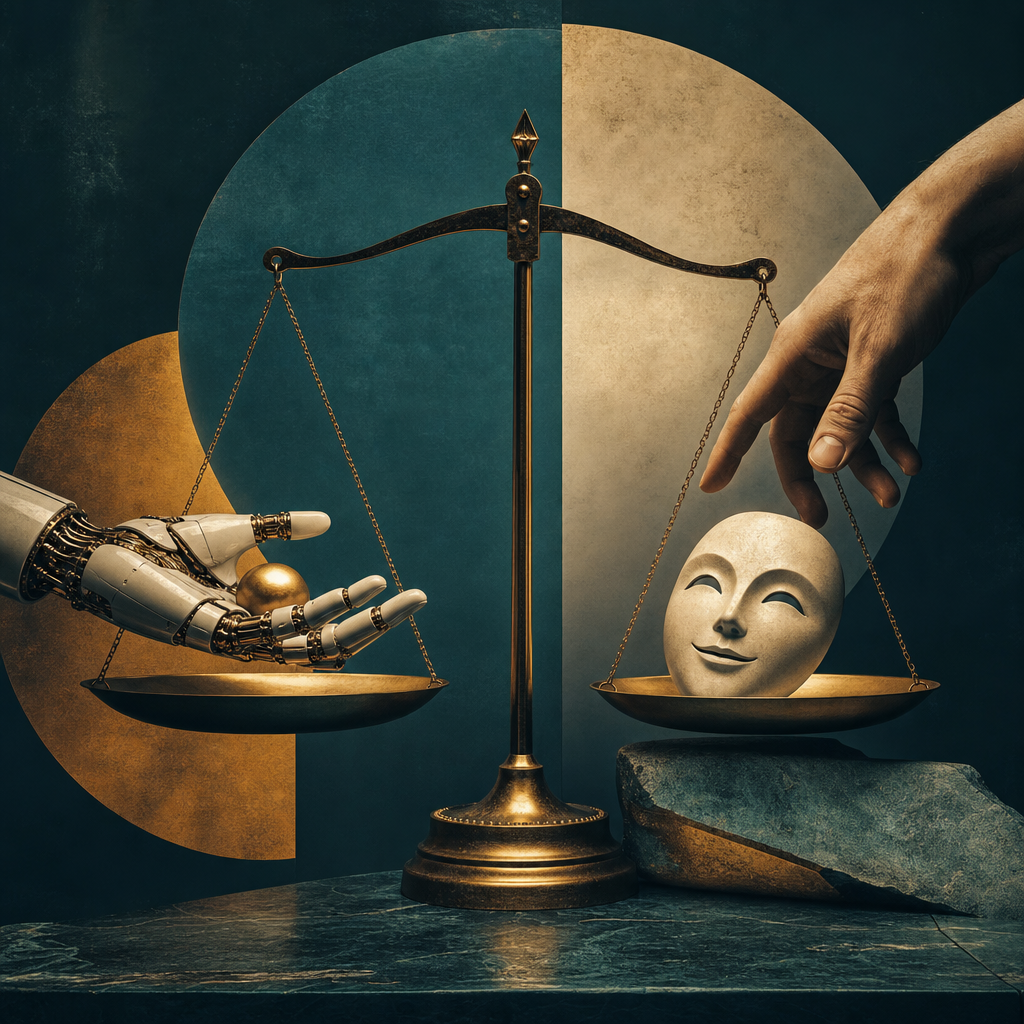
AI's Impact on Human Cooperation: Fairness Over Niceness
Recent research reveals that humans cooperate more with AI perceived as fair rather than merely nice, highlighting the importance of fairness in AI-human interactions.
The Study: Fairness vs. Niceness in AI
A recent study involving 1,152 participants explored how humans cooperate with AI agents exhibiting different behaviors: cooperative, selfish, and fair. The findings indicate that people are more inclined to cooperate with AI that demonstrates fairness, aligning with human expectations of equitable behavior. In contrast, AI agents that are simply nice or self-interested do not elicit the same level of cooperation.
Implications for AI Design
These results suggest that for AI systems to be effective collaborators, especially in roles requiring teamwork or negotiation, they must prioritize fairness over mere niceness. This insight is crucial for developers aiming to create AI that integrates seamlessly into human social structures.
Challenges in Implementing Fair AI
Designing AI that embodies fairness presents challenges. Fairness is a complex, context-dependent concept, and programming AI to interpret and act upon it requires nuanced understanding. Developers must consider diverse cultural and individual perceptions of fairness to build AI systems that are universally cooperative.
Future Directions
Further research is needed to define fairness in AI and develop frameworks for its implementation. Collaboration between psychologists and AI developers will be essential to create systems that not only perform tasks efficiently but also foster positive human-AI interactions.