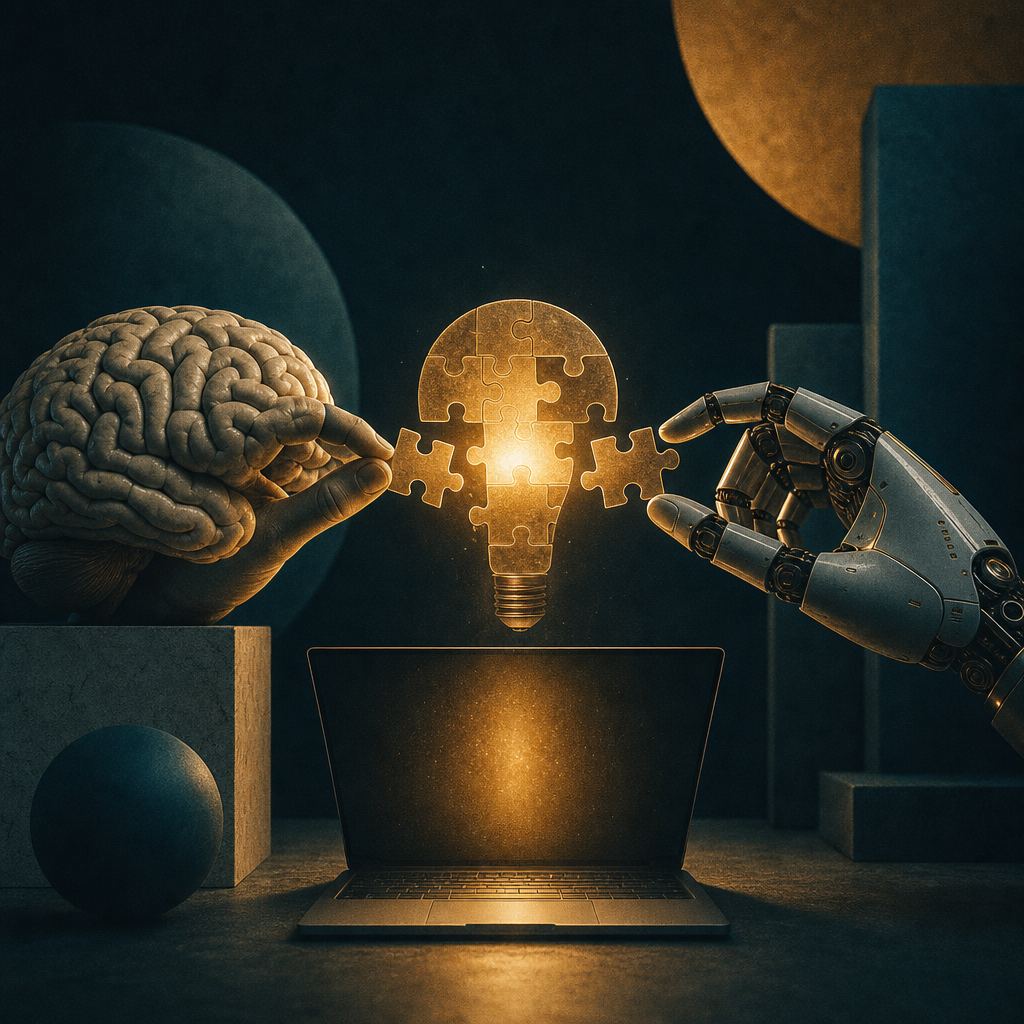
AI's Role in Enhancing Online Learning: Insights from Recent Research
A recent study from the Hong Kong University of Science and Technology (HKUST) sheds light on how artificial intelligence can enhance online education. The research demonstrates that brief pre-lecture interactions with AI instructors can significantly improve students' brain synchrony and learning outcomes, matching the effectiveness of human instructors.
The Study at a Glance
The HKUST research team, led by Professor Li Ping, conducted an experiment involving 57 university students. Participants were divided into three groups:
-
No Interaction Group: Students watched a 14-minute video lecture without any prior interaction.
-
Human Interaction Group: Students engaged in an 8–10 minute face-to-face conversation with a human instructor before watching the lecture.
-
AI Interaction Group: Students had a similar pre-lecture interaction with an AI instructor designed to closely resemble the human instructor in appearance and voice. This AI was powered by GPT-4 and incorporated speech recognition, content generation, text-to-speech synthesis, and real-time talking-head animation.
During the lecture, the researchers recorded the students' eye movements, brain responses, and learning outcomes.
Key Findings
The results were striking. Students who engaged in pre-lecture interactions, whether with a human or AI instructor, exhibited:
-
Enhanced Neural Synchrony: Increased synchronized neural activity in brain regions responsible for information processing, cognitive resource allocation, and socio-emotional responses.
-
Improved Learning Outcomes: Better performance in recall, comprehension, and knowledge transfer tasks compared to the no-interaction group.
Interestingly, both the human and AI interaction groups achieved comparable learning outcomes, suggesting that AI instructors can be as effective as human instructors in enhancing online learning.
Different Pathways to the Same Outcome
While the end results were similar, the pathways differed:
-
Human Interaction: Engaged both cognitive scaffolding and strong social-emotional processing, mediated by gaze alignment.
-
AI Interaction: Supported more top-down cognitive processing while still providing meaningful emotional support.
This indicates that effective AI educational systems don't need to perfectly replicate human interaction. Instead, they can succeed by generating sufficient social-emotional resonance while leveraging computational strengths in retrieving knowledge and delivering personalized learning.
Implications for Online Education
This research offers valuable insights for the future of online education:
-
Scalability: AI instructors can provide personalized pre-lecture interactions to a large number of students simultaneously, addressing scalability challenges in online education.
-
Consistency: AI can ensure consistent quality in instructional interactions, reducing variability that might occur with human instructors.
-
Accessibility: AI-powered interactions can make quality education more accessible, especially in regions with a shortage of qualified human instructors.
Conclusion
The HKUST study highlights the potential of AI to enhance online learning through brief pre-lecture interactions. By fostering neural synchrony and improving learning outcomes, AI instructors can play a pivotal role in the future of education. As we continue to integrate AI into educational settings, it's crucial to design systems that not only deliver content but also engage students in meaningful ways, leveraging both cognitive and emotional pathways to facilitate learning.